Joachim Herz Foundation
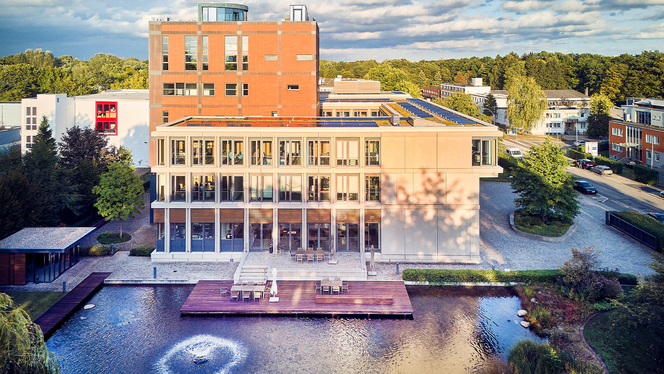
Our aim is to provide effective solutions to current challenges such as resource scarcity, climate protection and the shortage of skilled workers.
Joachim Herz Foundation – At a Glance:
- Headquarters: Hamburg
- Founded: 2008
- Legal form: Nonprofit Foundation
- Board Members: Prof. Dr.-Ing. Dr. Sabine Kunst (Chair), Ulrich Müller
- Funding Types: Project funding, Individual grants, – Structural funding
The three clusters
Cluster Materials and resources of the future
Despite Germany’s strength in basic research, comparatively few research findings find their way into societal and economic use. So while science is already delivering promising solutions for existential challenges such as climate protection and resource scarcity, these need to navigate the critical early development phase and find their way into application faster and more frequently. Only in this way can research be made useful.
Our Foundation supports research into the use of innovative materials and resources that are sustainable and future oriented. To enable true new beginnings, we aim to overcome existing hurdles at various levels: Among researchers, we encourage and foster entrepreneurial spirit in order to increase the added value of application and utilizationstrategies. At the institutional level, we support flexible structures and a new entrepreneurial mindset among leadership in order to support the translation of research findings into practical use faster and more easily. We particularly support interdisciplinary and transfer-oriented projects, because innovation needs a diversity of perspectives and the courage to take risks.
Cluster Entrepreneurship
We aim to bring more of the results of Germany’s excellent fundamental research into practice. For this, we need scientists with an entrepreneurial spirit who have the courage to explore new paths and eager to found spin-offs. Germany has significant untapped entrepreneurial potential:, butthese talents are not discovered early enough or systematically nurtured to the extent required. Our academic system for young researchers focuses too heavily on purely scientific education. We want to awaken the entrepreneurial spirit in the new generation of scientists, empower them to found enterprises, and strengthen the entire German ecosystem for spin-offs-from science.
We promote entrepreneurship in service of society. Entrepreneurs are not only essential for securing future prosperity but also play a key role in developing innovative products and services that address the Major challenges of our time. Only a new generation of entrepreneurs, who not only
focus on radical innovation but also on the development of sustainable business models with fair wages, can guide the German economic and social model into the future.
Cluster Vocational Education and Digital Transformation
Hundreds of thousands of people are training in such programs and they will shape the future of work. Millions of people who have received vocational training mirror in their current work our understanding of the future of employment. At the same time, companies face the challenge of holding their own in a globalized world and adapting to changing markets.
We therefore promote the expansion of digital and other key competencies, especially among trainees and talented young professionals. We also support educators in acquiring expertise and didactic skills in digital technologies. We support projects that enable the transfer of digital innovations and AI applications from research and business into vocational education practices. In this way, we help ensure that new ideas and innovations can have an impact within companies.
Cross section cluster Transatlantic Dialog & Events
We strengthen the transatlantic dialogue between Germany and the United States. Through the Joachim Herz Haus in the Atlanta metropolitan area, we promote academic and social networks as well as exchanges among young professionals and vocational schools.
Basic principles of our foundation work
We are operational and promotional and provide individual, project and structural support. Unlike publicly funded institutions, we can react quickly and flexibly and are prepared to support experimental and high-risk projects in order to try out new things. Failure is allowed, because we see ourselves as a learning, agile organization that reacts to findings through evaluation and adapts projects and working methods to achieve the best possible effectiveness.
Our foundation is in a position to make a substantial contribution to mitigating the increasingly pressing issue of climate change. This threatens both the efficiency and freedom of society and therefore represents one of the greatest current social challenges. We are therefore committed to the Sustainable Development Goals (SDG) - both in our substantive work and in the way we invest our capital and organize our work.
Particularly relevant SDGs for us are:
- Quality education
- Sustainable cities and communities
- Climate action
- Health and well-being
- Industry, innovation and infrastructure
Articles of Association & Governance Code
Our founder Joachim Herz wanted to use the foundation's assets for the long-term promotion of education, science and research. The focus is on the natural sciences, economics, law, medicine and the promotion of educational institutions, students and charitable organizations.
- Statutes (in German)
- Governance Code (in German)
- Organizational chart
Finances
When Joachim Herz died in 2008, his assets amounted to around 1.3 billion euros (market value). This was the basis of our foundation's assets.
Expenditure for charitable purposes (in € million):
- 2020: 18,9
- 2021: 20,7
- 2022: 24,2
- 2023: 26,5
- 2024: 51,5
- 2025: 29,0
The foundation's capital is predominantly invested and tied up in entrepreneurial activities. This is in line with the founder's wishes and is also stipulated in the Articles of Association. The majority of the capital is invested indirectly in Beiersdorf AG, in addition to other company investments. The foundation also has a real estate portfolio in the USA and Germany. The assets are supplemented by a broadly diversified securities portfolio. In all investment decisions, we pursue the goal of preserving the assets in real terms over the long term and generating regular income.
Scientific Advisory Board
- Prof. Dr. Andreas Breiter
- Prof. Dr. em. Peter Frensch
- Dr. Thomas Grünewald
- Prof. Dr. Stefan Hecht
- Prof. Dr. Jan Louis
- Prof. Dr. Ada Pellert
- Prof. Dr. Ricarda Winkelmann
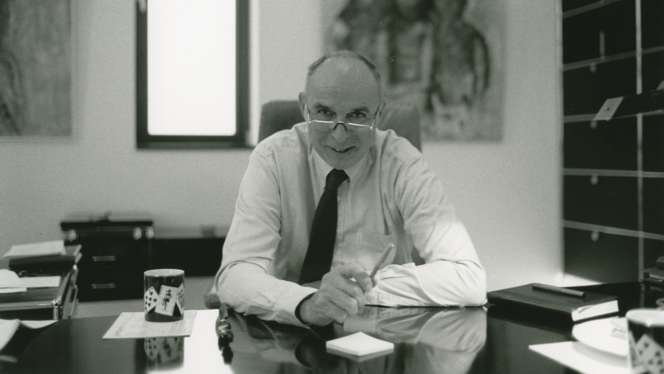
Joachim Herz
Joachim Herz was unconventional and cosmopolitan, loved the USA, the can-do mentality there and the entrepreneurial spirit. Values such as freedom and individuality were important to him. He was of the opinion that wealth obliges social responsibility and that both individual and structural support can create new opportunities for young people in particular.
Joachim Herz was eight years old when his father Max Herz founded the Tchibo mail-order coffee business together with Carl Tchilling-Hiryan shortly after the Second World War in 1949. He learned early on how much hard work was involved in building up a family business. His childhood was characterized by thrift and modesty, as the family lived in the usual conditions of the post-war period. This basic experience had an impact on the rest of his life - for although he later inherited such an enormous fortune, he condemned wastefulness throughout his life. He is said to have been unpretentious and had a direct manner - he cleaned his own windows. He was distanced from Hamburg's high society and rejected the glamor of the city centre.

The path to your own company
In the 1970s, he acquired the commercial space of the "Java Kaffee Geschäfte GmbH & CO. KG" in Langenhorn. However, he never roasted or sold coffee; among other things, he had a real estate management company in the USA, which still exists today. The foundation is located on the former company premises and is therefore a conscious commitment to the location.
Due to his father's entrepreneurial history, Joachim Herz considered it essential that young people should have a basic understanding of economic interrelationships and scientific education. Only in this way could they take their place in a democratic, market-based society in a self-determined and responsible manner. We are still committed to these values in our work to promote education, science and research. The guiding principle developed from this, "Knowledge creates freedom", guides our actions in all areas of our work. We think Joachim Herz would like that.